


Key Takeaways
At Dimensional Contractors, we believe homeowners deserve a clear understanding of how envelope improvements influence home performance. These insights help our clients in La Crosse and the surrounding areas make informed decisions about their living spaces.
- Upgrading to energy efficient windows and doors significantly reduces seasonal heating and cooling demand.
- Thermal performance relies heavily on glass technology, including pane counts and specialized coatings.
- Frame material selection impacts both the structural integrity and the insulation capacity of window systems.
- Proper professional installation is essential to prevent air leaks that undermine energy-efficient glass or doors.
- Strategic use of federal tax credits allows homeowners to offset the costs of qualifying home improvements over multiple years.
The impact of windows and doors on home energy efficiency
Home performance is fundamentally tied to how effectively the building envelope regulates thermal transfer. When we work with residents in areas like Onalaska or Holmen, we focus on identifying where heat gain and loss occur through ageing barriers. Addressing these leaks is a core part of the expert home renovation services Dimensional Contractors brings to our local communities.
How heat gain and loss affect your HVAC system
When windows and doors are not properly insulated, they force HVAC systems to compensate for constant temperature fluctuations. This increased workload leads to higher utility costs and accelerated wear on your heating and cooling equipment. By installing high-performance barriers, we ensure that your climate control systems operate within their intended parameters rather than struggling to maintain equilibrium.
The role of air leakage and thermal bridging in drafts
Air leakage often occurs at the seams where window frames meet the wall, allowing conditioned air to escape and unconditioned air to enter. Thermal bridging, meanwhile, happens when frame materials conduct temperature directly through the opening, creating cold spots in the winter or heat patches in the summer. Eliminating these pathways is critical for creating a consistent, comfortable indoor climate.
Long-term savings and year-round comfort benefits
Investing in modern replacements provides benefits that extend far beyond immediate energy savings. Homeowners often report a significant increase in noise reduction and physical comfort, as the improved seal eliminates erratic drafts. Over time, these upgrades protect the value of your property while reducing your carbon footprint.
Understanding high-performance window components
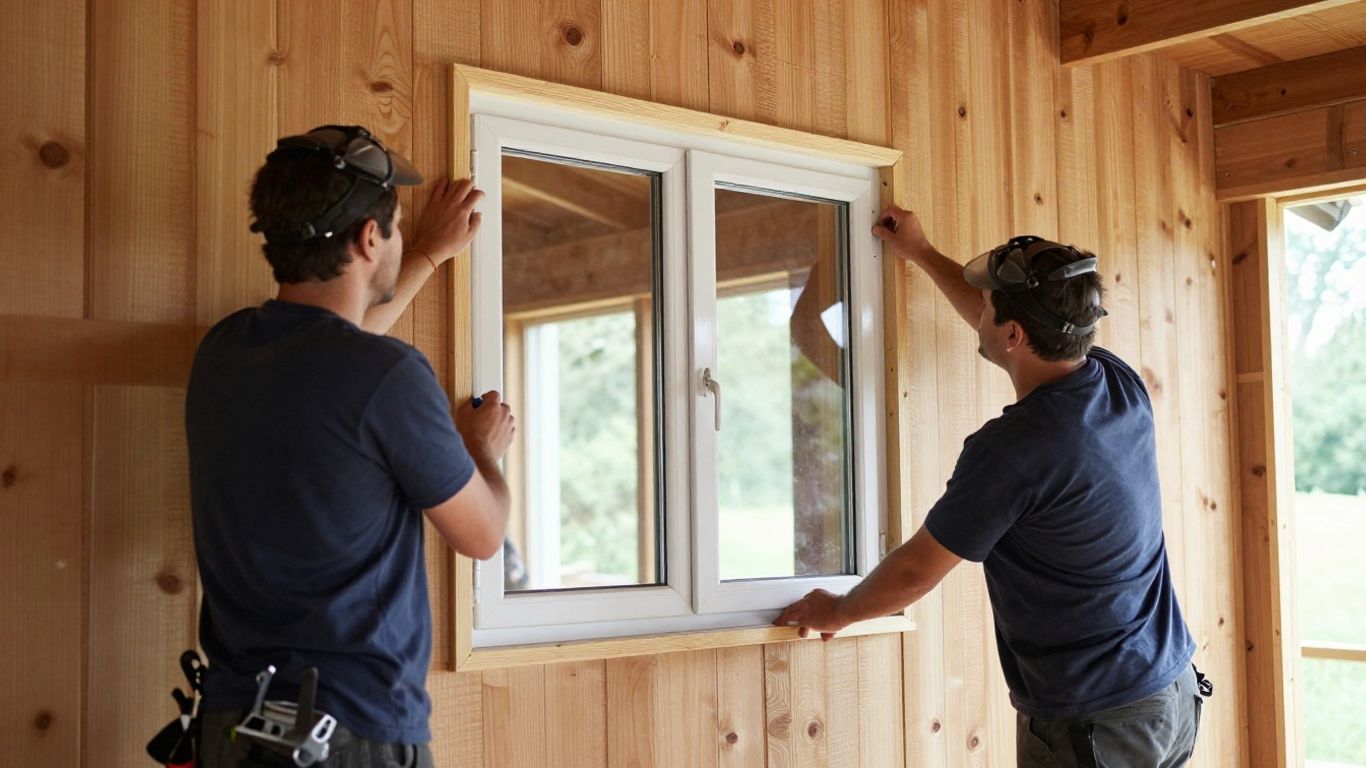
Selecting the right window system requires evaluating how individual components contribute to overall thermal resistance. At Dimensional Contractors, we prioritize explaining how glass packages and frames work together to deliver real-world performance for our neighbors in La Crosse. Understanding these parts is essential for any homeowner aiming to increase their home efficiency effectively.
Advantages of double-pane versus triple-pane glass systems
Double-pane glass creates a single insulating pocket of air or gas that drastically outperforms traditional single-pane glazing. Triple-pane systems add a second chamber, providing an additional layer of resistance that is particularly effective in regions with harsh winters. Choosing between these options often depends on your specific climate needs and thermal performance goals.
Comparing frame materials: vinyl, fiberglass, and wood-clad
Vinyl frames offer excellent thermal resistance with minimal maintenance requirements, making them a popular choice for many modern homes. Fiberglass provides exceptional structural strength and holds up well under extreme temperature shifts, while wood-clad windows offer a classic aesthetic with a protective exterior shield. Each material balances cost, aesthetic appeal, and insulation density differently.
The importance of low-e coatings and noble gas fills
Low-emissivity (low-e) coatings are thin, metallic layers applied to the glass that reflect long-wave infrared energy, keeping your home warm in winter and cool in summer. When combined with noble gas fills like argon or krypton, these coatings form a highly effective barrier against heat flow. This combination is essential for maximizing the energy efficiency of your window units.
Selecting energy-efficient exterior doors
Choosing the right exterior door is just as important as selecting efficient windows for your overall home performance. These entry points must withstand diverse regional weather conditions while serving as a primary thermal barrier. We evaluate materials and construction quality to ensure every installation protects your indoor climate.
Fiberglass versus steel construction for insulating properties
Fiberglass doors are highly resistant to dents, scratches, and warping, and they do not conduct heat or cold as readily as other materials. Steel doors are incredibly durable and offer high security, often featuring a foam-injected core to provide the necessary thermal resistance. Both options can be excellent, provided the core construction meets modern energy efficiency benchmarks.
Evaluating door core materials for thermal resistance
Advanced door core materials, such as high-density polyurethane foam, fill the void between surface panels to minimize heat transfer. This core acts as insulation that keeps the door’s surface temperature consistent with the indoors. We compare core density ratings to ensure your new entry door provides a reliable thermal buffer for years to come.
Choosing effective weatherstripping and threshold seals
Even the most expensive, well-insulated door will underperform if it has significant gaps around the perimeter. High-quality compression weatherstripping and proper threshold seals ensure a consistent, tight fit when the door is closed. Ensuring these components are properly maintained prevents air from leaking at the most common problem areas.
Navigating industry ratings and performance standards
When we guide homeowners through product selection, we rely on standardized testing metrics to verify performance. These tools allow us to compare different products accurately regardless of the manufacturer or specific glass configuration. Understanding what these labels mean empowers you to make a more logical and data-driven purchase decision.
Interpreting u-factor and solar heat gain coefficient (shgc)
U-factor measures the rate of heat transfer through a window, with a lower number indicating better insulation properties. The solar heat gain coefficient (SHGC) measures how much solar radiation a window admits into your home. Balancing these two metrics is essential for managing year-round energy consumption based on your specific orientation and local climate.
The value of energy star certification for your climate
ENERGY STAR certification provides a reliable benchmark for energy efficient windows and doors, indicating that products meet strict performance criteria. Because climate needs vary across the country, certification is often tied to specific regional zones. Choosing products labeled for your climate zone ensures you get the most appropriate level of thermal protection for your area.
Using nfrc labels to compare product performance
The National Fenestration Rating Council (NFRC) provides objective, third-party testing for window and door performance. Labels provided by the NFRC detail exactly how a product will perform in different conditions so you can avoid reliance on vague marketing claims. Checking these labels is the best way to verify that a product will deliver the savings you expect.
The importance of professional installation
Even the highest-rated products will fail if they are not installed correctly within the rough opening of your home. We see the difference that precise, methodical installation makes for our clients’ long-term satisfaction. Dimensional Contractors emphasizes these structural technicalities to ensure that every replacement we perform maintains its efficiency over time.
Preventing air infiltration with proper flashing and sealing
Proper flashing and advanced sealing techniques are vital to keep water and air from entering the wall assembly around your windows and doors. We use high-grade materials to seal every gap, creating a seamless connection between the frame and your home’s structural components. Preventing air infiltration at this stage is the only way to realize the full potential of your high-performance products.
Ensuring structural alignment for long-term operability
If a window or door is not square, level, and plumb during installation, it will likely suffer from hardware wear and seal failure in the future. We take the time to ensure perfect structural alignment from the outset, which protects the seals and ensures smooth, reliable movement for years. Maintaining this alignment is fundamentally about preserving the investment you have made.
Why local expertise matters for regional weather conditions
Regional weather patterns, from extreme Wisconsin winter humidity to summer heat, require solutions that are specifically tuned to the local atmosphere. Understanding the nuances of moisture management and pressure differences in the La Crosse area is critical for preventing issues like rot or mold. Our localized expertise ensures that your installation account for the reality of your specific environment.
Financial incentives and tax credit opportunities
Making home energy improvements often comes with financial benefits designed to encourage better building practices. Being aware of available tax credits helps homeowners justify the cost of higher-performance, premium equipment. We encourage all our clients to explore these government-sponsored programs to maximize their investment return.
Overview of the energy efficient home improvement credit
The Energy Efficient Home Improvement Credit allows taxpayers to claim a percentage of the costs associated with specific home envelope upgrades. This credit is designed to make it more affordable for individuals to invest in high-quality products that meet federal energy standards. It is a non-refundable credit, meaning it applies directly toward reducing your annual tax liability.
Qualifying criteria for windows and exterior doors
Not all products qualify for tax incentives; they must be listed as meeting specific U-factor and SHGC standards for your climate zone. Generally, exterior doors must meet specific insulation criteria, while windows must meet the current ENERGY STAR requirements. Always confirm that your specific purchase documentation meets these requirements before claiming the credit on your taxes.
Strategies for maximizing annual tax credit limits over time
Because there are annual caps on the amount of credit you can claim for different types of improvements, many homeowners choose to spread upgrades over several years. By categorizing your projects—such as completing window replacements in one year and door replacements in the next—you can stay under annual limits while collecting the maximum aggregate credit available. Planning your home improvements in this way allows you to optimize your financial strategy over a longer period.
Conclusion
Updating your home with modern, efficient windows and doors is one of the most effective ways to manage your long-term energy use and maintain comfort throughout the seasons. By focusing on high-performance materials and professional installation, you ensure that your property remains resilient against the elements and significantly more comfortable for your family. As you look into these upgrades, prioritize quality standards and take advantage of available financial incentives to turn your vision of a more efficient home into a reality.
Frequently Asked Questions
What is the average lifespan of energy efficient windows?
High-quality windows typically last anywhere from 20 to 30 years, depending on the material and the level of maintenance performed. Over this period, they should remain effective as long as the seals stay intact and the frame does not shift or degrade due to environmental factors.
Do I need to replace all my windows at once to see an improvement?
While replacing all windows at once allows for a consistent envelope and greater immediate efficiency, upgrading in phases is also very effective. You can prioritize rooms that are most frequently used or those that are draftiest to feel the comfort benefits incrementally.
How does humidity affect window performance?
Excessive humidity can lead to condensation if the window surface temperature drops below the dew point, which is more common in single-pane or poorly sealed windows. Modern, high-performance windows with thermal spacers help manage these temperature differences, significantly reducing internal condensation.
Can I install energy efficient doors in an older home?
Yes, modern replacement doors are designed to be installed in existing openings regardless of the home’s age. An experienced professional ensures the door is properly shimmed and sealed to match the structural requirements of older framing.
What does a low u-factor mean for my energy bills?
A lower U-factor indicates that a window provides better thermal resistance, which slows down heat transfer. By reducing this transfer, your heater and air conditioner work less, which generally results in a noticeable reduction in monthly utility bills.
Does the frame material affect the tax credit eligibility?
The tax credit is generally based on the performance ratings of the finished product, such as the U-factor and SHGC, rather than the specific material of the frame. However, certain materials make it easier for a product to achieve the low conductivity required to meet those performance standards.
How often should I check my window seals?
It is wise to inspect the condition of your window and door seals at least once a year, typically during your seasonal maintenance check. If you notice signs of cracking, peeling, or visible air gaps, it may be time to consult a professional about minor repairs or replacement.
